
Health Tips & Nutrition Guides
Multigrain Atta in Pakistan: Price, Ingredients & Soft Roti Tips

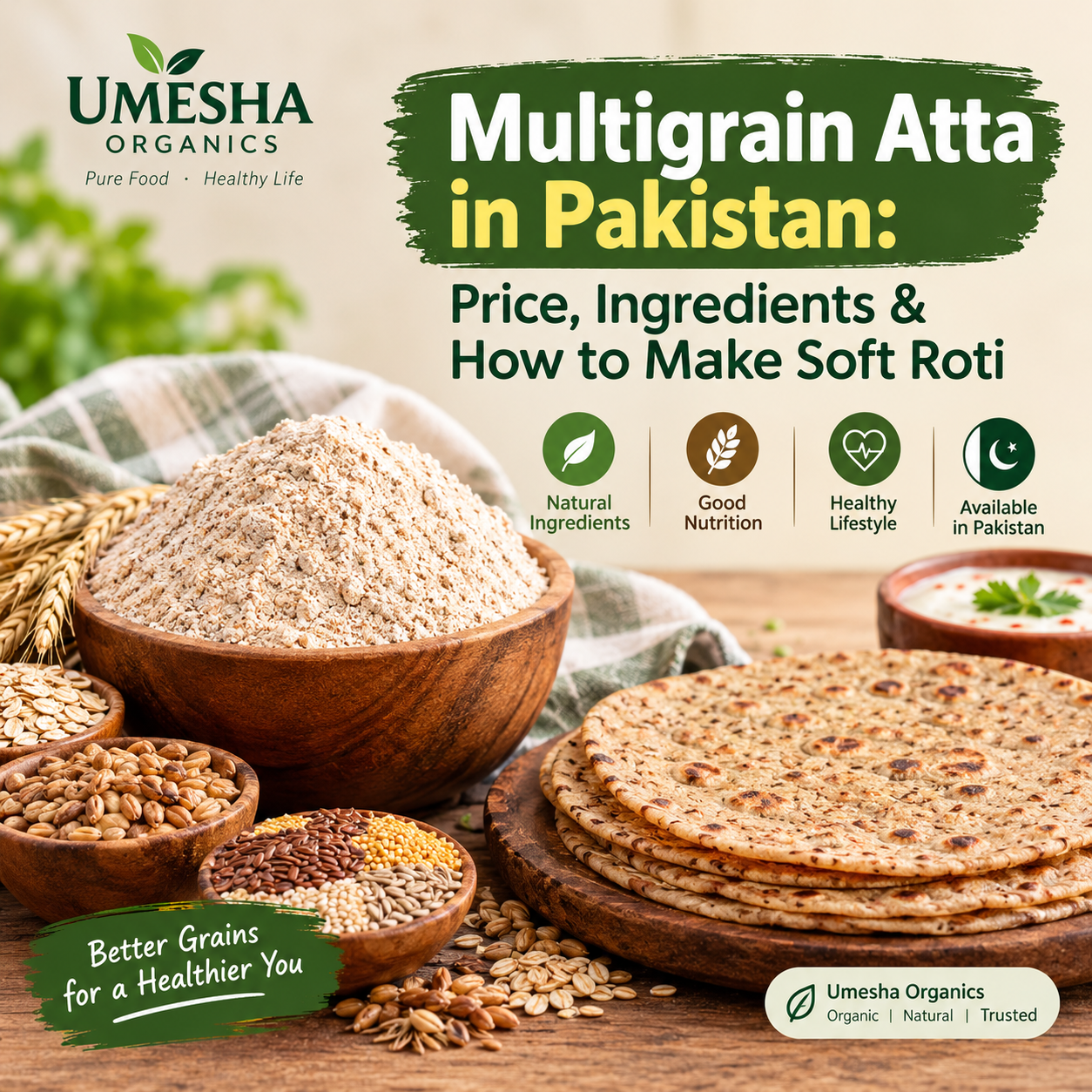
Multigrain atta is a flour blend made from more than one grain. In Pakistan, where roti and chapati are part of everyday meals, it can add variety to the flour you use at home. The right blend, fresh flour, enough water and a little resting time all make a difference when you prepare soft rotis.
This guide explains common multigrain atta ingredients, what affects its price in Pakistan, and practical ways to make rotis that are easier to roll and stay soft after cooking.
What Is Multigrain Atta?
Multigrain atta combines wheat with other grains or grain flours. The exact recipe differs by brand, so always check the ingredient list rather than assuming every blend is the same. Umesha Organics Multi Grain Atta is made with wheat, oats, barley (jau), ragi and bajra.
Each grain brings its own flavour and texture. Wheat helps provide the structure many people expect from everyday roti, while other grains can change the colour, aroma and feel of the dough. A blend with a higher proportion of non-wheat flours may behave differently from ordinary whole-wheat atta.
Multigrain Atta Price in Pakistan: What Affects It?
There is no single fixed price for all multigrain atta in Pakistan. Cost depends on the grain mix, sourcing, milling, pack size, freshness, packaging and seller. Compare the price per kilogram as well as the ingredient list and storage instructions.
For the latest available pack sizes and price, check the Umesha Organics Multi Grain Atta product page. Online prices and offers can change, so use the current product listing rather than an old price mentioned in an article.
Common Ingredients in Multigrain Atta
- Wheat: commonly provides the familiar structure and elasticity associated with roti dough.
- Oats: can add a mild flavour and alter the texture of a flour blend.
- Barley (jau): has a distinct grain flavour and may make dough feel different from wheat-only flour.
- Ragi: also known as finger millet; it contributes its own colour and flavour.
- Bajra: pearl millet, often used in South Asian flatbreads and flour blends.
Ingredient proportions matter. If you have a wheat allergy, coeliac disease or need to avoid gluten for medical reasons, do not assume multigrain atta is gluten-free. Wheat and barley contain gluten, and you should verify the product label before use.
How to Make Soft Multigrain Roti
- Add water gradually. Put the flour in a bowl and add lukewarm water a little at a time while mixing. Different blends absorb water differently.
- Knead until combined. Knead gently until the dough comes together. If it feels dry or cracks at the edges, add a little more water; if sticky, let it rest before adding extra flour.
- Rest the dough. Cover and leave it for around 15–20 minutes. This gives the flour time to absorb moisture.
- Keep portions covered. Divide the dough into equal balls and keep unused portions covered so they do not dry out.
- Roll without excess dry flour. Use light pressure and turn the dough as you roll. Too much dry flour can make the cooked roti feel dry.
- Cook on a properly heated tawa. Cook both sides until done, turning as needed. Avoid leaving the roti on the heat for too long, which can make it tough.
- Keep rotis covered. Stack cooked rotis in a clean cloth-lined container to retain warmth and moisture.
Tip: If your multigrain rotis keep cracking, try slightly increasing the water, allowing a longer rest, or mixing in a portion of whole-wheat atta if that suits the blend and your dietary needs. Small adjustments are normal because grain blends vary.
Multigrain Atta vs Regular Wheat Atta
Regular wheat atta has a more familiar dough texture for many households and is often easier to roll consistently. Multigrain atta offers a different mix of grains and flavour, but its dough may need more attention to hydration and resting. Neither label alone tells you everything about nutrition: check the full ingredients, fibre information and nutrition panel, and choose based on taste, cooking needs and dietary requirements.
How to Store Multigrain Atta
- Keep the flour in a clean, dry, airtight container.
- Store it away from heat, moisture and direct sunlight.
- Use a dry scoop and close the container after each use.
- Follow the package’s best-before and storage instructions, and discard flour if it develops an unusual smell, visible mould or signs of pests.
Frequently Asked Questions
Is multigrain atta the same as whole-wheat atta?
No. Whole-wheat atta is made from wheat, while multigrain atta combines two or more grains. Recipes and proportions vary by product.
Why does my multigrain roti crack while rolling?
The dough may be too dry, may need more resting time, or may contain a blend that behaves differently from wheat-only flour. Add water gradually and keep the dough covered.
How can I compare multigrain atta prices in Pakistan?
Compare current price per kilogram, pack size, ingredient list, freshness information and seller details. Check the product page for current pricing because offers can change.
Can everyone eat multigrain atta?
Not necessarily. Ingredients differ, and blends containing wheat or barley contain gluten. Read the label and follow professional dietary advice if you have a food allergy or medical dietary restriction.
Explore Umesha Organics Multi Grain Atta
If you want to check the ingredients, available pack size and current price, visit the Umesha Organics Multi Grain Atta product page. Review the product details and choose the option that suits your household.
One thought on “Multigrain Atta in Pakistan: Price, Ingredients & Soft Roti Tips”
Comments are closed.