
Health Tips & Nutrition Guides
How to Eat Pumpkin Seeds (Kaddu Kay Beej): Daily Uses & Tips

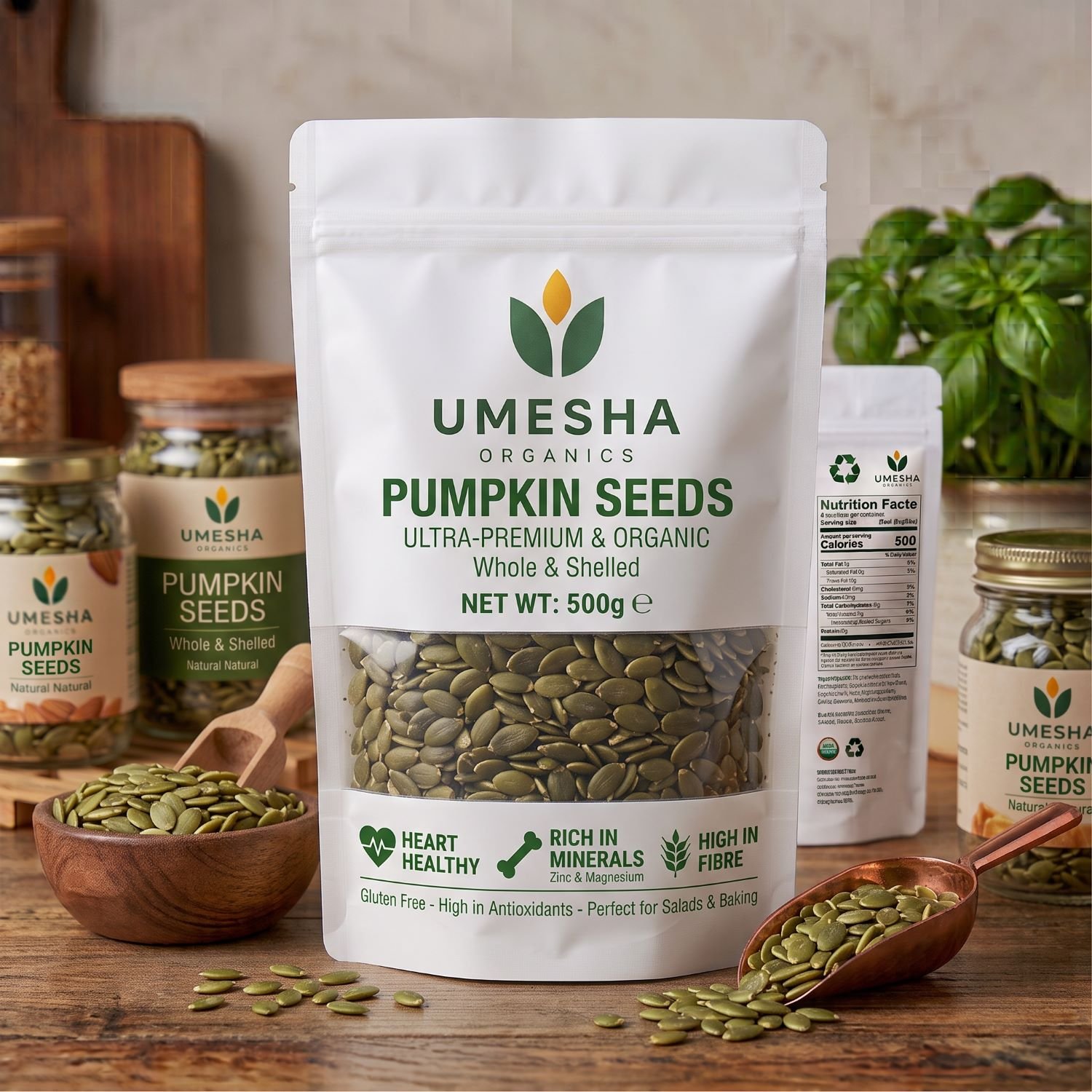
Pumpkin seeds, known as kaddu ke beej or maghaz-e-kaddu in Pakistan, are easy to add to everyday meals. You can enjoy them plain, lightly roasted, or mixed into breakfast, snacks and homemade recipes. The key is to keep portions sensible and choose a preparation method that suits your taste.
In this guide, Umesha Organics shares simple ways to eat pumpkin seeds in Pakistani kitchens, how to roast and store them, and a few easy recipe ideas.
How to Eat Pumpkin Seeds Daily
There is no single perfect way to eat pumpkin seeds. Start with a small amount and use them in a way you can comfortably maintain. A small handful can be a practical serving for many adults, but individual needs vary; check the nutrition label if you are tracking calories, minerals or carbohydrates.
- As a snack: Eat plain or lightly roasted pumpkin seeds instead of heavily salted snack mixes.
- With breakfast: Sprinkle them over porridge, oats, yogurt or cereal.
- With fruit: Add a spoonful to a bowl of apple, banana or seasonal fruit.
- In atta or dough: Add a small quantity of chopped seeds to homemade bread or roti dough for texture.
- On salads and raita: Sprinkle over cucumber salad or raita just before serving.
- In chutney or toppings: Grind a little with herbs and spices, or use as a crunchy topping for soups and cooked vegetables.
Raw vs Roasted Pumpkin Seeds: Which Should You Choose?
Both raw and roasted pumpkin seeds can fit into a balanced diet. The best option is the one you enjoy and can store safely.
- Raw seeds: Have a mild taste and work well in smoothies, porridge and recipes where you will blend or mix them.
- Dry-roasted seeds: Have a nuttier flavour and crunch, making them convenient for snacking and toppings.
- Salted or flavoured seeds: Can be tasty, but check the sodium and added ingredients if you are limiting salt.
Roasting changes flavour and texture; it does not turn pumpkin seeds into a medicine or guarantee a particular health result.
How to Roast Kaddu Kay Beej at Home
- Spread shelled pumpkin seeds in a single layer on a clean, dry pan.
- Heat on low to medium-low, stirring regularly so they roast evenly.
- When they smell nutty and begin to turn lightly golden, remove them from the heat. Avoid burning them.
- Let them cool completely before placing them in an airtight container.
You can roast them without oil. If you prefer, use a very small amount of oil and mild spices. Keep added salt modest, especially if you have been advised to limit sodium.
Three Easy Pumpkin Seed Ideas for Pakistani Kitchens
1. Breakfast topping
Add a spoonful of pumpkin seeds to daliya, oats or plain yogurt. Pair with fruit or other foods you normally eat for breakfast.
2. Homemade seed mix
Mix pumpkin seeds with a small amount of almonds, walnuts or kishmish. Keep the portion modest and store the mix in a sealed container.
3. Crunchy salad or raita topping
Sprinkle roasted seeds over cucumber, tomato and onion salad, or over raita just before eating. Add them at the end to preserve their crunch.
How Much Pumpkin Seeds Should You Eat?
For detailed nutrient data, you can also check the USDA FoodData Central database. Nutrient values can vary by seed variety, processing and serving size.
Portion needs depend on your overall diet, energy needs and health circumstances. As a practical starting point, try a small handful rather than eating straight from a large packet. Pumpkin seeds are nutrient-dense, so portions can add up quickly. If you have a prescribed diet, food allergy, digestive sensitivity or a medical condition requiring specific dietary advice, follow your clinician or dietitian’s guidance.
How to Store Pumpkin Seeds
- Keep seeds in a clean, dry, airtight container.
- Store them away from direct sunlight, heat and moisture.
- Use a refrigerator or freezer for longer storage, especially in warm weather.
- Check for an unusual smell, dampness or rancid taste before eating; discard seeds that seem spoiled.
Are Pumpkin Seeds a Treatment for Any Health Condition?
Pumpkin seeds provide nutrients such as protein, unsaturated fats and minerals, but no single food treats or prevents a disease on its own. They should not replace prescribed medicines or professional advice. If you are managing diabetes, blood pressure, kidney disease or another condition, ask your healthcare professional how pumpkin seeds fit your personal eating plan.
Frequently Asked Questions
Can I eat pumpkin seeds every day?
Many people can include a modest portion as part of a varied diet. Your suitable portion depends on your dietary needs and any medical advice you have received.
Should I soak pumpkin seeds before eating?
Soaking is optional, not essential. If you soak them, use clean water, keep them refrigerated if soaking for an extended period, and dry or use them promptly to reduce spoilage risk.
Is it better to eat pumpkin seeds in the morning or at night?
There is no universally best time. Add them to whichever meal or snack works best for your routine and portion needs.
What are kaddu ke beej called in English?
Kaddu ke beej are called pumpkin seeds in English. Shelled pumpkin seeds are also commonly sold as pumpkin kernels or pepitas.
Can I add pumpkin seeds to roti or atta?
Yes. You can finely chop or grind a small amount and mix it into dough, or sprinkle roasted seeds over meals. Start with a little because they change the texture.
Explore More from Umesha Organics
For a broader overview of pumpkin seeds, read our guide: Kaddu ke Beej: Uses, Nutrition & Recipes. This article focuses on practical daily use, preparation and storage.
Note: This article is for general food and nutrition information only and is not a substitute for personalised medical advice.